Extract Iso Via Network Battery

If you have an optical drive there is no need to read this page any further: just download.iso image, burn it and boot to flash bios. If you are not that lucky. BIOS, ECP, CD/DVD and Harddisk firmware disks can be booted over the network with PXELINX as part of the SYSLINUX package. This requires that. The Restore Solutions FAQ, Frequently Asked Questions. Fire and Rescue Authorities must. The reduction of the voltage from 400,000 volts to 230 volts occurs in sequential steps via a network of sub. Network Equipment Shapes for Microsoft Visio. Create detailed rack and data center diagrams using this set of 2,000.
I sometimes find the Java setup on my various Apple devices to be a mystery. Recently, I was trying to get a Java applet to run in the same way on 2 iMacs and my MacBook Air. The applet is a simple vpn client from Juniper that lets me access a Citrix Desktop from any Mac that I can install the Citrix receiver client on so I can work on 'Company stuff' from a large screen iMac when I'm sat at home or from my MacBook when I'm on the road (it works fine over 3/4G). The first thing is that you have to do of both Java and Safari to get the applet to run at all. Once that was all done, I could log in from all my Macs, fire up the applet and establish a secure connection. On two of the Macs, as soon as I fired up the Citrix app, the Java vpn window would show 'error'. The console showed a Java crash.
But on the third Mac, everything worked fine. I made sure that the Safari and Java preferences were set the same on each machine but still no joy. Then I remembered that I had done some Java development in the past and installed various jdks from Oracle so I ran: java -version in Terminal on each machine. I keep everything up to date via the Java control panel (currently 1.7xx soon to be 1.8) so was surprised to see this: java version '1.6.0_65' That was on the working Mac. Then I remembered the difference between 'System' Java, Java plugins, and Java development kits. Simply put, you can have multiple versions of Java in different places. What was happening on the not-working Macs was that the jdk versions were being used, and the Juniper vpn client won't work with them.
To fix things for the moment I simply removed the jdk folders. Sudo rm -fr /Library/Java/JavaVirtualMachines/* And then checked that the reported version of Java was 1.6 on each Mac. Web applets still use the up to date, secure version 1.7 plugin. [ crarko adds: I believe Oracle has said that eventually Java will no longer support applets at all, on any platform.]. A few weeks ago, a number of people started reporting having trouble with Siri. Phrases like 'Call my wife' or 'Tell my dad' stopped working.
Siri knew who those people were but proclaimed 'Uh oh, I don't have a phone number for Jane Isa Doe.' And beneath, there's a message: 'Content Not Available.'
I debugged this for over an hour and on a hunch, found a workaround that seems to work for nearly everyone who has tried it. All you have to do is delete the middle name of the person in *your* contact card where it is stored as a relationship. I'm not sure why that works; it shouldn't, but it does. That's why I call it a workaround instead of a fix.
I figure Apple is mucking around with Siri and perhaps caused a bug or some sort of corruption. I'd be curious to know from MacOSXHints users whether they are experiencing this problem in the first place and if the workaround works for you, too. I'd also like to understand why this works and why the problem even exists. I had tried a ton of suggested fixes for the issue before stumbling upon this work around.
You can read more about it in my. In it, I link to the Apple discussion forums at the bottom, where people have been saying that this workaround fixes the issue for them. [ crarko adds: I find I already don't have middle names in any of my Contacts, so I've not seen this.
I wonder if something is going on at Apple's end, where the Siri processing gets done. Perhaps in preparation for iOS 8.]. As of August 29, 2014, Google has decided to intentionally break old browsers. They say it's not a bug, it's by design, even though Google's says it accepts Safari 4 as a fully supported browser.
If you want Google searches to go back to the modern style, you need to change your User-Agent string. For Safari, enable the Develop Window and use an option in there that works. Internet Explorer 9 (Windows) works, for example.
[ crarko adds: I don't have an older system active at the moment to try this. It's inevitable that older software becomes obsolete, the same way older hardware does. I think the actual hint here is a reminder that if a site misbehaves, changing the user agent can be an effective troubleshooting tool.]. Usually I want to open Gmail in Chrome and URLs pointing to my development server in Firefox. For everything else I use Safari. There is this nifty free app called that enables you to register your own handler for an URL. Although it had beed designed to register your own non-standard URL schemes, it can intercept standard http and https as well.
In LinCastor (which you need to double-click twice to fully open for editing): • Add a new URL scheme • Choose AppleScript handler Paste the following code in, (replacing the stub code at the bottom). On handle_url(args) if ( URL of args starts with 'then tell application 'Google Chrome' open location URL of args end tell else if ( URL of args starts with 'then tell application 'Firefox' open location URL of args end tell else tell application 'Safari' open location URL of args end tell end return 1endObviously you should customize the code to suite your own specific needs. You can validate the script right in LinCastor before saving/activating it.I use the same mechanism to launch 'site specific browsers apps' created.
For example I have a JIRA app wrapper which looks for anything staring with [ crarko adds: I tested this, and it works as described. LinCastor requires OS X 10.8 or later. I tried it in 10.10 beta 2, and it also worked there. There's not much documentation for it, so tinker around a bit to get the result you want.]. I'm writing a detailed set of instructions for getting VPN 'on-demand' working with iOS 7. See for the details (it's way too much stuff to post via MacOSXHints, as much as I've been a fan of this site for many years). The complete set of instructions include: • • • with VPN 'on demand' capabilities (for both IPSec and OpenVPN).
A few comments about this work: • One of the primary objectives was to document a setup where the VPN-connected iOS device routes all the device's traffic through our network – i.e.: • All the iOS device's traffic goes through our network and is encrypted while doing so -- so the cellular data and WiFi parts of the device's traffic can't be monitored. • All unencrypted (and normall SSL browsing, etc.) traffic emanates only from our LAN through our network's (land-based/hard-wired) router. • This gives our mobile devices the benefit of some site filters provided by our firewall appliance (another 'how to' I have planned). • A major objective of the on demand aspect of the VPN capability is to have the a VPN connection automatically created whenever the iOS device is either only on a cellular network or on a WiFi network that's not ours (i.e., so the above requirement is automatically fulfilled).
• Both the IPSec and OpenVPN configurations include setups using only user+password/account-based authentication as well as certificate-based authentication. • Although the iOS device instructions are specific to an iPhone, they also work for other iOS devices -- the user just has to find the equivalent items for the VPN settings. • Although the server side of the instructions is specific to the, the setup configuration will apply to many other routers – the user will simply have to find the equivalent settings for that router/VPN appliance.For anyone interested in a good router, read my for a strong but conditional recommendation. [ crarko adds: An ambitious project, and hopefully it should work with iOS 8 as well.].
Many people continue to use iWork 09 apps, because they contain features missing in the newer versions. However, having the older apps on your system mean a constant nagging from Apple to update to the newer versions. If you do download the newer versions, then it is impossible to make the older apps the default for your documents.
The old Get Info » Change All trick doesn't work. Here's what to do to remedy that. First, make a backup. Then install the latest iWork apps. Your older versions get moved to a subfolder called iWork 09. That's why you have the backup.
Next, move the NEW apps to an external disk or other partition. You can then restore the 09 apps to the /Applications folder. Or leave them in the subfolder if you prefer.
Having the apps on different volume from the system disk lowers their priority, so the 09 apps in your /Applications folder remain the defaults for your documents. What is more, any further updates will update the newer versions on your external drive, leaving your 09 apps untouched. [ crarko adds: I rather wish I had done something like this before updating. Maybe rolling back tp the 09 suite from Time Machine and then following this procedure will work.]. This is my take/an update on I found here awhile back for running OS updates without creating a user on a Mac. It is applicable to any system 10.5 and up. This can be helpful if you have a Time Machine backup that's on a newer OS than your install media, or if you're selling/donating your Mac as it saves the new user having to update things.
First things first, wipe your drive (and zero it if you don't trust the end user of this computer) and reinstall your desired OS. Once your OS is installed, boot to your install media or the Recovery Partition if available. Open Terminal from the Utilities option in the menubar. In the new Terminal window, type the following: resetpassword This will bring up the Password Reset utility. Click Macintosh HD or whatever your HDD is called.
You'll notice the only user account that's available is root. Enter a password you'd like to use/remember, though it doesn't really matter as we'll be disabling root and removing this password later. Click save, close the password reset utility and go back to working in Terminal.
Now you'll want to enter the following command. Touch /Volumes/Macintosh HD/private/var/db/.AppleSetupDoneThis will create the file on Macintosh HD that tells the computer it has completed the setup so you're able to skip the process and login with the root account we just enabled.
Close Terminal and reboot the computer into the Macintosh HD. You should be greeted by the login screen with an option that says Other. Click Other, enter root as the username and the password you chose to login. Proceed with Software Updates and any optional software you'd like to install, making sure to install for All Users if prompted. Also keep in mind that any preference changes you make will only apply to the root user, so there's no sense in wasting any time customizing the look, feel and general operation of the computer.
After all software is installed, open up Terminal once more. Enter the following code: rm /private/var/db/.AppleSetupDone This will remove the file we originally created and re-enable the setup assistant to help create the new/first user on the Mac. Next, open up Directory Utility.
This can be found in Users & Groups in System Preferences. Click Login Options, then click Join. By Network Account Server.
You should then see the option Open Directory Utility. Once in Directory Utility, click Edit in the menubar and then select Disable root user. As a note, this can be done while logged in as root. Close Directory Utility and restart the computer, booting back into to your install media or Recovery Partition. Open up Terminal one last time and enter: resetpassword Once the Password Reset utility has appeared, click the root user once more.
Instead of changing the password, however, simply click the Reset button to reset Home Folder ACLs. Reboot your Mac, confirm you see the Setup Assistant and you're ready to move onto restoring your backup or selling your computer! [ crarko adds: I haven't tested this one.]. I've become somewhat obsessed with the faces feature in iPhoto. Currently, I have about 7000 unidentified faces in my library. I knock out a few hundred here and there.
It's oddly satisfying, but I go to a lot of large events - events where a lot of people look familiar because they are regulars, but I don't know them. This makes finding faces rather cumbersome, especially since the method of ignoring faces requires the mouse. Everything else can be done with the keyboard. Plus, doesn't track repeatedly ignored faces, so the same faces keep showing up. Well, I've discovered a way to work around these cumbersome limitations. Doing everything with the keyboard makes things go a lot faster. If you're using the Find Faces feature and skip faces you don't know (because you don't want to pause to use the mouse), the next time you click on Find Faces, you'll be presented with those same unknown faces over and over again.
They build up and always get presented in the same order, so you end up spending a lot of time skipping them before you get to new faces. To avoid this, just name all these unknown faces 'Unknown' (or some other word with an uncommon starting letter).
Then all you have to do to ignore a face (once you've tabbed to it) is type a 'u.' After you've labeled a bunch, open the 'Unknown' face album and bulk-confirm all the unwanted faces.
Now the next time you use Find Faces, you'll get right to the new faces. A few other time-saving tips: You can create a smart album containing unnamed faces, open the album and hit the info button, then start tabbing and naming. The photos with unnamed faces will disappear as you update them. This allows you to have a good idea of your progress. Not naming a face when the person's name is on the tip of your tongue, can make them rather hard to return to when their name pops into your head.
I find it useful to name them something like '?Alan's Wife' or some other memorable note. All such names will be at the top of your Faces album listing (because of the question mark), and you can change the name of all occurrences simply by renaming the album. Let auto-complete do most of the work. Most times, the first few letters are all you have to type before iPhoto fills in the rest of the name. Note, iPhoto uses Facebook, your contacts, and your previously named faces for auto-fill, but it skips contacts' middle names and does not include nicknames. When confirming faces, if you come across a different face that you know, you can right/control-click and name it. Plus, sometimes all it takes to remember a name is the context of the photo, but the Find Faces feature does not let you zoom-out to see the whole image.
Yet, when confirming faces, you can unzoom/zoom with the switch at the top-right of the window. I find that the confirm-faces interface is a faster way to find new faces than the Find Faces feature and I was methodically going through each face album to find new faces this way before I discovered the smart album trick mentioned above. [ crarko adds: Faces is not a feature I use very much, but this might get me to start. By the way, sorry about the slow July. I've been on vacation a bit, and the hint queue is pretty bare at the moment.
I'll be putting up a couple of polls related to Yosemite as we await the public beta. Things will probably remain slow until that release.].
By following any of the instructions here you are accepting the very real risk of turning your ThinkPad into a big expensive paper weight, as a firmware update gone wrong can create unfix-able problems. Proceed at your own risk! Some ThinkPad fans have created Custom BIOSes to remove whitelists, disable annoying errors, do Fn-Ctrl keyswaps, and add more functionality. Check the wikipage for more information. • X200, X60, T60, Macbook 2,1 - - Based on Coreboot, this BIOS (approved by the FSF) removes all proprietary blobs to create Free Libre Open Source Laptops, where everything from the motherboard to the computer can use Open Source Software.
Richard Stallman famously uses a Libreboot X60. • Sovem's Whitelist Removed BIOSes - A famous user from BIOS-mods.com, that removes mPCI whitelists from BIOSes upon request. • T61, R61, X61/X61s/X61T, X300 - - Enables SATAII, removes whitelist, thermal fixes, Fn-Ctrl swap. • T43/T43p, R52, X41/X41T - - Removes Error 2010 for aftermarket hard drives, and the BIOS whitelist. A user on NotebookReview named 'Middleton' made these alternative BIOSes to enable SATA2 on certain Thinkpad models (X61/T61/R61/X300).
These ThinkPads are limited to SATA1 in their BIOS even though the hardware is SATA2. This is a huge drawback for anyone wanting to use SSDs, because it is so much slower. Also, it is not possible to install some wireless cards, because only certain models are whitelisted by IBM/Lenovo. Removes this limitation as well. See the wikipage for installation instructions, downloads, and more description. Note: If your BIOS-Update tool says that no update is needed, then simply downgrade the Bios first: On Lenovo's drivers download page, the old Bios files are listed at the very bottom of the page.
Downloading New Firmware. Flashing the wrong firmware for your hardware may cause permanent damage to your ThinkPad. It is up to you to confirm that the firmware you are using is correct. A list of links to firmware downloads can be found at for most Thinkpad models. You can also check the Lenovo Support website's.
Lenovo/IBM provides firmware upgrades in a variety of packages: • Diskette • Non-diskette • Linux diskette • BIOS Utility • Bootable CD Not every type of package is available for every model. The BIOS Utility and Bootable CD packages combine the BIOS and ECP firmwares. For the other packages, there is one for each firmware.
Flashing incompatible firmwares, or flashing them in the wrong order, may cause permanent damage to your ThinkPad. It is important to understand that Thinkpads from IBM have two separate firmwares: the BIOS, and the Embedded Controller Program (ECP).
A given BIOS version will require a certain version of the ECP. You must read the Lenovo website and/or.txt files to confirm which BIOS is compatible with which ECP, and the order in which to update them. Update Order The Lenovo/IBM documentation is sometimes unclear about the order in which these two firmwares should be updated. When in doubt (i.e. IBM didn't provide specific instructions for your model or a particular firmware update), update the ECP first, and then the BIOS. Also, make sure to do the two updates immediately one after the other.
Sarfaroshi Ki Tamanna Song Download Rang De Basanti on this page. The EC firmware is usually much better at backwards compatibility than the BIOS. Updaters for newer models take care of both BIOS and EC, and use automatically whatever sequence is needed, so you don't have to worry about it. Installed Firmware You can check the current BIOS and ECP versions on your ThinkPad as detailed here: DMI IDs Please consider updating the before (and after) updating your BIOS.
Updating Firmware Firmware flasher program can run on DOS (Lenovo PC DOS) or Windows but, unfortunately, not Linux. So in theory there are two basic steps to update the firmware (either the BIOS or the ECP) on a ThinkPad not running Windows: • Get or create a bootable image with supported OS • Boot that image and, if not started automatically, ran flasher program Recent Thinkpads have firmwares available as Bootable CD image, e.g., FILENAME.iso. If you have an optical drive there is no need to read this page any further: just download.iso image, burn it and boot to flash bios.
If you are not that lucky, read on. First you need to realize that there are different ways to boot DOS on PC (theoretically it is possible to boot Windows to ran flasher, but why?): from internal hard drive, CD drive, USB Flash drive or, as the last resort, floppy drive. Easiest way is from internal hard drive, but you'd better avoid touching it until you don't want to loose files there. Is not recommended, so there are two best options to boot: CD drive or USB Flash drive. Sparse instructions below provide you guidance how to do different parts of this pazzle but it's your duty to understand what to do and how to do that. Using UEFI Especially usable when CDROM is not available, tested on X140e, but should work in most recent firmwares as these supports UEFI, much simpler than older methods outlined in this and other pages. You should have a USB mass storage device you can erase.
Double check the device name so you do not overwrite any other filesystem. # dd if=xxx.img of=/dev/sdX 5. Reboot, enter BIOS setup, enable UEFI only (or 1st priority) at startup options, save and reboot. Interrupt boot, press F12 and select USB mass storage device as boot source.
The BIOS update utility should run and you should succeed in flashing BIOS. Create a bootable image In case Lenovo does not provide your laptop with Bootable CD it is possible to create one from *discket packages. Extracting an update image. If there is a Bootable CD image available, e.g., FILENAME.iso, just download that, instead of mucking around with image files. If you are going to update the firmware by booting from a CD, you need to turn FILENAME.IMG that you extracted above into an.iso file. The is a wonderful thing. Escan Serial Key Free Download on this page. Thanks to it, a bootable CD can be made with a bootable floppy image in such as way that the CD believes that it is a 2.88 MB floppy drive.
This allows you to replace a boot floppy by a boot CD in nearly all situations. It is very easy to create such a bootable CD ISO image in Linux using the mkisofs tool.
Run a command as follows: # genisoimage -b 1WUJ25US.IMG -c boot.catalog -o bootcd.iso 1WUJ25US.IMG #or older mkisofs Where *.IMG is the name of the image file extracted above. This creates a CD with one file on it and marks that file as the boot image. You can now burn the bootcd.iso to a CD in your favorite CD-burning program. Who are these 'many'? Link to a discussion? Once the bootable image, FILENAME.IMG, is extracted from the.exe, it can be booted directly through GRUB without the need of burning a CD, using the image-loader.
Locate the memdisk file from the syslinux package. You can search for it with find: # find /usr -name memdisk #or just use 'dlocate memdisk' or 'locate memdisk' if these programs are installed If /usr/./memdisk is not present, syslinux is not installed.
You will need to install it to boot a.IMG from GRUB. Copy both the FILENAME.IMG and memdisk files into /boot directory. For example: # cp./FILENAME.IMG /usr/share/syslinux/memdisk /boot/ Open /boot/grub/menu.lst in your favourite editor. Copy the active section into a new section, and edit the new section: Parameter Instructions Example title Pick a name for the new section.
This will show up in the GRUB boot menu. Title IBM ECP Update root Do not change. This is the partition containing the /boot directory root (hd0,0) kernel /boot/memdisk will allow you to boot an image file. Kernel /boot/memdisk initrd This is the name of the firmware-updater image file, e.g., 1IUJ13US.IMG initrd /boot/1IUJ13US.IMG Do not modify the original section in /boot/grub/menu.lst, or you might not be able to boot back to the operating system. If you have, you will need a section for each firmware's FILENAME.IMG in /boot/grub/menu.lst. Please, report your success/failure with flashing BIOS from the manually cooked CD (from.IMG file) here: Booting from a USB Flash drive Updating the BIOS in MS-DOS mode (This process works for most Thinkpad models that has Windows XP, Windows Vista or Windows 7 OS) 1. Using HP USB Boot Utility,.
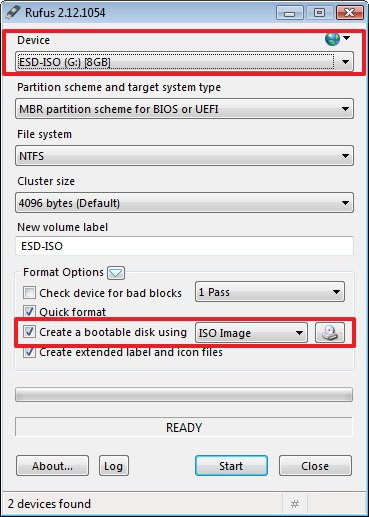
Extract the (*.ima) from the ISO BIOS image (e.g. Will do this).
Using a tool that can open.IMA files (such as ), extract all files to a temporary folder. Run the HP tool, select the USB device, I used FAT32, create a DOS bootable disk and point at the win98boot folder - then 'Start'. Warning: this formats the USB flash drive and all data will be erased! Once complete (you could test if it boots at this point), copy the extracted BIOS files from the temporary folder you created to the USB flash drive. Boot from USB flash drive by pressing F11 within the BIOS boot logo.
At the DOS command prompt, type 'updflsh' and then follow the prompts by pressing 'Y' or Enter. Make sure that you have a fully charged battery pack and the AC Adapter is firmly plugged before proceeding with the BIOS update. DO NOT Power off the laptop or unplug the USB flash drive while the update is in progress or else update will fail and your computer will be unable to boot and system board may need to be serviced. This process takes around 1-2 minutes. A long beep followed by a short beep will notify you that the update is complete and the system will automatically power off. Power on the laptop then enter the BIOS setup by pressing F1 and Load BIOS defaults.
Using grub4dos (also for Linux) is a GNU GRUB fork with interesting features. One of them is the ability to boot ISO images directly off USB flash drives.
Contrary to the name, GRUB for DOS works fine on Linux. Follow these steps: • Download the latest grub4dos package at (I needed 0.4.4 for my USB2 drive - 0.4.3 did not work.) • Unpack • Insert your FAT-32 formatted pendrive • Run sudo./bootlace.com /dev/sdX, where /dev/sdX is the device name assigned to your pendrive (use sudo fdisk -l to figure this out). Be very careful to get the device correct or else you could overwrite your hard drive! This creates grub4dos boot sector in MBR of the flash drive. • Copy the files grldr and menu.lst to the root directory of your pendrive. • Convert the ThinkPad.IMG file to a.ISO file using genisoimage -b 1yuj18us.img -c boot.catalog -o 1yuj18us.iso 1yuj18us.img • Copy the ISO image to the root directory of your pendrive (e.g.
• Edit menu.lst on the pendrive and include the following section (of course putting the appropriate ISO image name): title thinkpad-bios map (hd0,0)/1yuj18us.iso (hd32) map --hook chainloader (hd32) boot • Reboot and press F12 to select booting from USB. • If all went well, you should be able to boot the Thinkpad's ISO image and flash the BIOS. I tested it successfully on T400. Manually creating a USB Flash drive in Linux Use 'geteltorito' to extract the update image from ISO image, downloaded from Lenovo's drivers page. Write the extracted image to a USB Flash drive using dd.
'geteltorito' is available in Ubuntu (at least in Trusty, 14.04) from package 'genisoimage'. • Install the genisoimage package: sudo apt-get install genisoimage • Extract the boot image from the ISO: geteltorito g6uj14us.iso >biosupdate.img • Install the boot image to USB Flash drive, make sure to install to the correct device!
(device for me was /dev/sdb): sudo dd if=biosupdate.img of=/dev/ bs=512K • Reboot and press F12 to select booting from USB. • If all went well, you should be able to boot the Thinkpad's ISO image and flash the BIOS. Tested successfully on: X1 Carbon, X230. Booting from a Floppy.
Using a floppy disk is NOT recommended. This is how IBM/Lenovo intended it. Use their.exe files to create a bootable floppy with the flash update on it. Boot from the floppy and there you go.
So, why is it not recommended? • If something goes wrong, your ThinkPad may be permanently damaged • Floppy disk drives are not reliable • Floppy disks are not reliable • It only works with /dev/fd0, meaning it won't work with a USB floppy So, even though Lenovo is now offering 'Linux diskette' updaters, that will create a bootable floppy under Linux, using a floppy is still not recommended. Besides, many people don't even have a floppy drive on their ThinkPad. If you really want to do it with a floppy, some tips: • Use a clean (in the physical sense) floppy drive • Use new floppies • Test floppies for errors before starting update process • Have multiple copies of the update disks ready--if one should fail, replace it with a copy • Should DOS complain of a read error, only respond wth 'Retry'.
How exactly did you do this? It failed for me.
Does it work only with.IMG files that are converted to.ISO files, or can.ISO files provided by Lenovo also work (how?) Booting from a Network Boot Image BIOS, ECP, CD/DVD and Harddisk firmware disks can be booted over the network with as part of the package. This requires that you have a DHCP and tftp server configured and setup properly on your network, and is probably not for the faint of heart. Make sure the firmware bootdisk is in linux 'dd' format, as the self-extracting.exe disks from the IBM website cannot be booted directly as such. This worked on the,,, and with various firmware updates. On the, it worked with ECP 1.30 but not with BIOS 1.32 After updating Lenovo recommends reseting your BIOS settings to their factory defaults after a firmware update. Also, please consider updating the after updating your BIOS. Special Cases • In one case, see (), it was not possible to upgrade the BIOS from Windows XP; a downgrade to Windows 98 was required to successfully run the BIOS upgrade app.
The symptoms in this case were that, once the files had been extracted to the hard disk, and the machine was to reboot into the upgrade app, it would beep and hang just before reboot, requiring a power cycle. Once the power was cycled, it would simply reboot back into XP without performing any BIOS upgrade actions. So even if you have Windows, you may still need to use the info on this page. Updating Thinkpad X Series The special update instructions for,,,,,,,,,,,,,,,,,,,,,,,,,,,,,,,,,,,,,,,,,,, Thinkpads are quite long.
You can find them at the page. Updating without battery or with dead battery This is a last-resort approach. Use this only if everything else fails.
The BIOS updater may refuse to update a BIOS without a battery, or if the battery charge is too low. In that case, extract the disk image with cabextract as per instructions above and dd it to an usb stick.
(This will destroy the data on it, of course.) Acquire a pure DOS boot cd such as Windows 98 recovery CD and boot that. Use F8 to abort the boot sequence of a windows 98 boot CD. If you need CD-ROM support, load CD-related things but say no to everything else. In particular, avoid loading himem.sys and doskey, as the presence of either program causes Phoenix bios flash tool phlash16.exe to abort. Change to the volume where flash2.exe and other tools are installed, and execute 'flash2.exe /u'.
This should bypass the battery check and perform the flashing. If that doesn't work, check if the update disk contains a tool called 'phlash16.exe'. This can be used directly to flash the image, and the invocation is typically 'phlash16 /exit $01c80000.fl1'. Updating the ECP with a dead battery or no battery presents a similar problem. For example, on the IBM ThinkPad X31, the normal command-line command to update the ECP would be UPDTFLSH ('UPDTFLSH $018E000.FL2'). But this utility checks for an installed and charged battery and will not let you update the ECP firmware if the battery is missing or not charged. Instead, issue 'QKFLASH $018E000.FL2'.
This will bypass the test for the battery and allow the ECP firmware to be updated. The same disclaimer applies here as for the BIOS: do this only as a last resort. If there is a power failure during the update, you will likely brick your laptop. This method won't work for the Thinkpad (and likely other older models). Since the 560X is a bit older, it won't be a big surprise if the battery is as dead as a dodo. Here's how to update the bios in this case: download the spsdi833 bios update and create the update floppy. If you have trouble creating this disk, and put them on a floppy.
Don't worry about making it bootable. Also, you will need a DOS bootdisk. A Windows 98 bootdisk will be fine. Boot the system with the W98 bootdisk, do not load CD-rom support. Remove the W98 bootdisk and put the disk with the BIOS update in the drive.
If you would now run UPDTFLSH you would get the battery message, so don't do that. If you open UPDTFLSH.exe with a text editor, you would find some lines about UPDTROM. UPDTROM is the actual flash tool, but you can't simply run it just like that.
Run the following: • updtrom /np /prep1 • updtrom /np /prep2 • updtrom /np /prep3 • updtrom /np /romcmp /romflsh /prep4 • updtrom /np /h8flsh /h8img /model Yes, you need to run updtrom five times. Hold your breath and reboot the machine. Perhaps not all these lines are necessary, but to be sure I ran them all, and this worked for me. So I suggest you do the same. This could probably be done from the harddisk as well, but I did not test that. For the follow instructions on website. It works not only for 2611 but for 2621 types too.