How Much Do Monster Truck Drivers Make A Year

The staccato thrum of eight pistons blasting past top dead center burrows down my ear canal and through my inner ear. It ignites my auditory nerve and burns its way straight into my soul.
Loud doesn't even begin to describe it. This is 540 cubic inches of supercharged big-block glory. This is the noise that fills arenas, sells stockpiles of merchandise and annihilates more cars than Los Angeles' 405 freeway.
This is the undiluted spirit song from the zoomie headers of Grave Digger, the world's most famous monster truck. And I'm way too close. Conversation here in the pits of the 2010 Monster Jam World Finals is utterly futile. Dennis Anderson, the driver of Grave Digger and the best-known name in the monster truck business, isn't remotely fazed. He simply turns up his volume: 'WE'VE ALWA.' Whoop, whoop, whoop, whoop. The auditory assault continues.
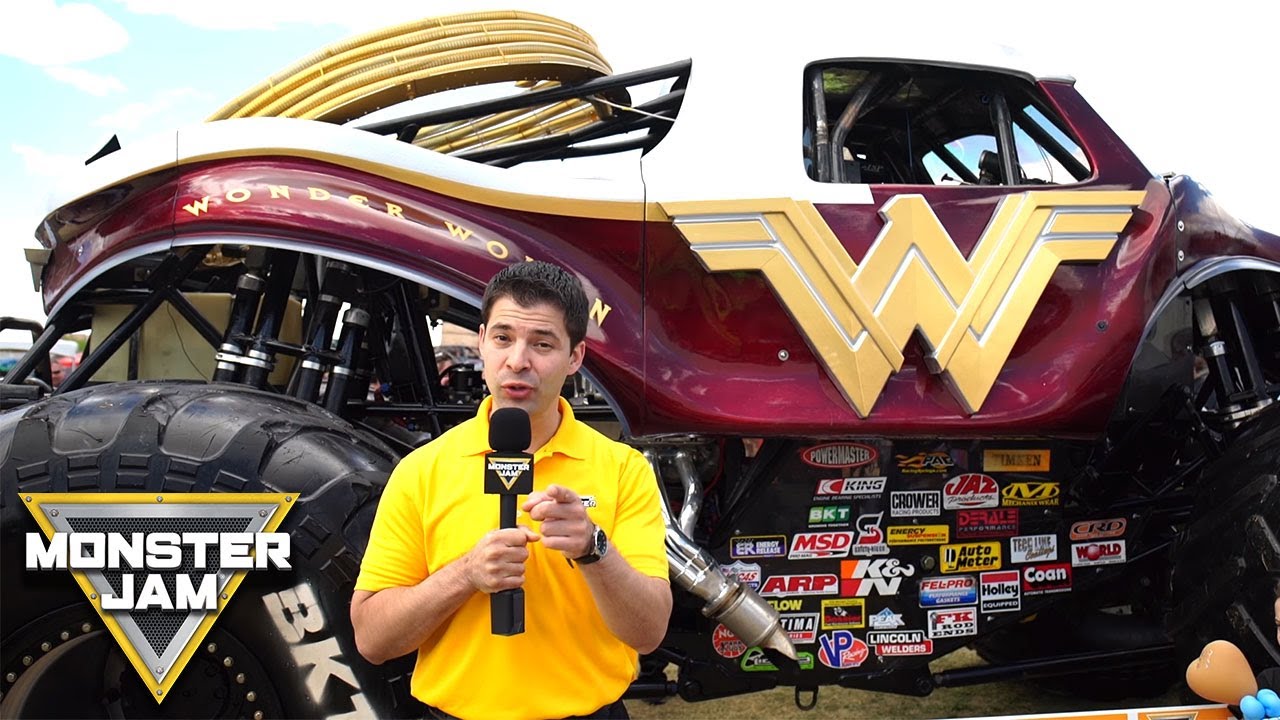
Apr 10, 2014. JS: Your Monster Jam bio says you were inspired to become a monster truck driver by the movie “Take This Job and Shove It.” PH: That's right. Back many years ago when that movie came out, and at that time it was Bigfoot. And it didn't even have tires as big as what we run today. Saw that and.
'WE'VE ALWAYS GOT.' Braap, braap, braap, braap, braap. Big cam in these things. 'WE'VE ALWAYS GOT A BACKUP TRUCK AT THE WORLD FINALS!'
It's a statement that handily summarizes monster truck competition, where the difference between fame and obscurity is all about just making the equipment survive. The Big Show The 2010 Monster Jam World Finals — held at Sam Boyd Stadium in Las Vegas — is the 11th edition of the monster truck event that produces the year's closest racing, biggest air and most outrageous crashes in monster truck racing. Monster Jam competition is divided into two categories: traditional head-to-head racing and the freestyle competition, where drivers hammer out 2 minutes of jumps and are awarded a score by the judges. Feld Entertainment produces the show and actually owns about half the trucks on the floor of this arena. The fans either don't know or don't care about this fact.
Detractors, however, are less forgiving of the sanctioning body owning both the competitors and the competition itself, claiming the big names - like Grave Digger - are given favor. Is it racing, or is it just WrestleMania on wheels?
Either way, the conflict is hardly unprecedented in American motorsport. Indy Racing League founder and president (at the time) Tony George campaigned a team with reasonable success in the series of his creation from 2005 to 2009.
Gerald Forsythe campaigned one of the most competitive teams in the Champ Car World Series, of which he was part owner, from 2004 until its consolidation with the Indy Racing League in 2008. This notion, of course, assumes you view monster truck competition as worthy of consideration as a legitimate motorsport in the first place. Monster trucks are, after all, just a sideshow as far as traditional racing fans are concerned. Their authenticity and significance — among non-fans at least — fall somewhere between pay-per-view wrestling and a Britney Spears concert. The bottom line is that the Monster Jam is first and foremost a show. And isn't all racing just a show, an opportunity for the best driver and machine to prove themselves? It can't be said that motorsport of any sort represents a noble cause.
When viewed with this perspective, Monster Jam is different from other forms of racing only in that Feld is up front about its potential conflict of interest. For Real A show it might be, but Dennis Anderson, driver of Grave Digger, and his rival Tom Meents, driver of Maximum Destruction, both play to win. And they're not the only ones. Races are typically short, between 15 and 30 seconds for a lap on mirror-image courses.
One mistake means it's over. This isn't momentum racing where mistakes can be overcome. Instead, it's a sledgehammer-to-the-kidneys motorsport, where it pays to be willing to crash. Walking the pits before Friday night's qualifying session, there's tension in the air. Crew members walk faster, drivers don't stop to chat and the machines, despite their cartoon and comic-book graphics, get intensive attention.
There's a sense of purposefulness here that's no less serious than any open-wheel pit we've experienced, from Long Beach to Indianapolis. If we suggested to anyone that what we have here is just an exhibition, some kind of sideshow, any one of an army of handlebar-mustached participants would be happy to give us a knuckle sandwich. It matters who wins. And it's obvious. Police Academy Ost Rar.
Hit the Track Trucks qualify without bodywork in case they roll over; there's no need to destroy the expendable parts before the main event the following night. Drivers are allowed two practice runs and one qualifying run. We've to our testing equipment so we can review Anderson's driving style in 100-samples-per-second detail. Anderson and his crew chief Dustin Brown are in lockstep with their approach to the event.
'Dennis doesn't want to change anything before this race,' Brown says. 'We come here every year with the same setup and when he's on, he's hard to beat.' Anderson's runs are impressive.
After repairing a steering vibration that had nearly caused a roll in practice the night before, he lays down three runs within 0.3 second of one another. His top speed during the lap increases progressively in practice from 67.2 mph to 69.1 mph and finally to 70.5 mph on his qualifying run. Braking points are deeper each run as the risk/reward calculus changes from 'preserve the equipment' to 'need to win.' And the data doesn't lie. In the electronic analysis we witness the calculated risk-taking of an experienced pilot who drives accordingly.
At the end of qualifying, Anderson and the Digger are among six drivers separated by a mere 0.03 second — a margin that is, on a relative scale, eight times smaller than that covering the top six qualifying drivers at the 2010 Spanish Grand Prix for Formula 1 cars. All in the Family Still, the idea that Anderson is concerning himself with hundredths of a second is as laughable as the idea of comparing monster truck racing to Formula 1 in the first place. When you talk to Anderson and his oldest sons Ryan and Adam, what you sense is a genuine desire to give the fans the show they came to see — and to win.
Ryan, 24, has been driving monster trucks for several years and Adam, 20, is in his first season. Among them, the Anderson family holds five world titles — three in racing and two in freestyle — each earned in Vegas at this event. There's another message here, though, one that's as authentic as Anderson's rock-solid handshake. And that is the family's appreciation for its fans.
Anderson has been racing monster trucks for 28 years, and he started in the early 1980s with nothing more than his own ingenuity and whatever parts he could scrounge. Even the Grave Digger brand name comes from Anderson's humble beginnings.
He created the iconic identity for his truck when a well-off friend was hassling him about his archaic equipment, then a Chevy-powered Kaiser Jeep military chassis topped with the body of a 1951 Ford truck. His response? 'I'll take this junk and dig your grave with it.' We suspect he did, and though the Grave Digger now wears the body of a 1950 Chevy truck, the attitude endures. For the Fans 'In 1999 I stopped driving the truck for myself and started driving it for the fans,' Anderson says. It worked, because when the gates of Sam Boyd Stadium open at the pit party on the day of the show, a mob of fans literally runs to get in line in order to get Anderson's autograph and spend 30 seconds with him. Only one other driver can rival Anderson's popularity and that's Tom Meents, who is pitted right next to Anderson.
Known for his all-or-nothing style, the driver of Maximum Destruction actually has more world titles than Anderson, eight all together. To this Anderson says: 'He can have all the trophies he wants, I just don't want him to have all the fans. Tom does respect me and I respect Tom, but out on the track, well, there's no respect there.' Still, they have to get along. In a sport where competitors might spend 25 weekends a year with each other, there's little room for bitterness.
'You can't live with an enemy like that,' says Anderson. Finding Fame The big prize, the one Anderson and every other driver want to win most, is freestyle. Racing is important, but it's the 40-foot-high, 100-foot-long leaps of freestyle that earn prestige. It's here that Anderson and Meents made their names.
'My biggest fear is failing to do it bigger and better than the next guy,' says Anderson. Doing so is where the risk enters the equation. Anderson broke his shoulder several years ago and his son Ryan suffered a concussion after crashing at this event in 2009. The most common injuries are to the dangerously high cervical vertebrae of the neck, according to Mike Wales, Feld's senior director of operations. Just as with any other motorsport, the risks are real. Anderson notes, 'If you have a crash every week in your street car, you'd be hurt. I have a crash every week and very seldom am I hurt.
When I got hurt in the past it was because of a lack of knowledge and pushing too hard without the right equipment.' Fortunately, Feld Entertainment offers health insurance to its drivers, something that few motorsport sanctioning organizations do. Anderson says it isn't cheap. Monster Preparation While walking the pits the night of the show, I find Anderson in his trailer. It's clear he shouldn't be bothered, so I seek out another driver, Charlie Pauken. But I'm stopped by a crew member, who says, 'He's getting himself geared up.
Best not to bother him now.' I look around and notice there are no drivers to be found. But there, standing in his trailer, watching his crew make final preparations to his truck, is Tom Meents. He's joking, sucking back a Mountain Dew and eating something out of a bag that looks like donut holes. Wales, the Feld Entertainment guy, looks at Meents, then looks back at me. Noting the obvious, he makes this profound observation: 'He's a little farm-boy crazy.
He'll just go out there and stick his foot in it.' Meents' pre-event Zen might come from the local 7-Eleven, but his strategy is right out of the all-or-nothing playbook that defines the world's biggest motorsports superstars. It's a tactic that sometimes pays off and sometimes breaks the truck on the first jump. With Meents, either way is spectacular. 'I'm going to do what got me here,' Meents tells me. 'It's going to be two minutes of maximum destruction.
I'll roll out on the floor, punch myself in the face — and drive.' The Grand Finale As the night progresses, the unlikely unfolds, as Grave Digger and Maximum Destruction face off in the racing finals. ('Is this WrestleMania?'
The skeptics ask.) And when the dust clears, Anderson is the victor, a result earned by textbook-perfect driving. This is his fourth world championship and his address to the crowd is as authentic as it is emotional. He recalls a fan who, earlier in the day, gave him his late mother's locket as a good luck charm. 'He told me to ride it to the finals and that's what I did,' Anderson says.
'I drive this truck for you. Thank you for every nut and bolt on my truck and every shingle on my roof.'
And then, in tears, he adds, 'I'm gonna screw this truck into the ground tonight.' But later, in freestyle, both Anderson's Grave Digger and Meents' Maximum Destruction fall short of everyone's expectations.
Instead Charlie Pauken wins with a run that repeatedly kisses the sky thanks to equal parts muscle and elegance. It's the best performance of the night and everyone knows it.
The Verdict At the end of the day, monster truck racing takes the fundamental conventions of a back-woods good time (attitude, dirt and horsepower), infuses them with magnitude (big-block race engines, superchargers and 66-inch tires), then plays out the consequences in front of fan-packed arenas around the world (or in Vegas). After five days of observing Dennis Anderson, his boys, his crew and his competition balance the testosterone-fueled nature of their sport against the physical, legal and logistical constraints in which it must operate, I've come to two realizations. First, Anderson and company are good at what they do. They're at once first-class showmen, humbly appreciative competitors and deceptively talented drivers. Second, this is genuine motorsport.
The idea that any outcome could be orchestrated amid the unmitigated mechanical chaos of monster truck competition is absurd. More important, it matters little what you think of the legitimacy of the competition. Monster truck racing is dangerous, unpredictable, difficult, expensive and exclusive. And if these attributes don't make it a real motorsport, then there are no real motorsports.
Running time 113 minutes Country United States Language English Budget $8 million Box office $11.7 million (domestic) Used Cars is a 1980 American film, co-written by and, and directed by Zemeckis. Rudy Russo () is a devious car salesman working for affable but monumentally unsuccessful used car dealer Luke Fuchs (). Luke's principal rival, located directly across the street, is his more prosperous brother, Roy L. Fuchs (also played by Warden), who is scheming to take over Luke's lot. The film also stars and, and the supporting cast includes,,,,,,, and Sarah Wills. The movie was directed by and written by Zemeckis and his long-time writing partner.
The executive producers were and. The original music score was composed. Filmed primarily in, the movie was released on July 11, 1980. Although not a box-office success at the time, it has since developed status due to its dark, cynical humor and the Zemeckis style. It was marketed with the tagline 'Like new, great looking and fully loaded with laughs.'
It was the only Zemeckis film to be rated R by the until 2012's and 2016's. Contents • • • • • • Plot [ ] Rudy Russo is a young and cunning used car salesman in with aspirations of running for the state Senate. He works at the struggling New Deal used car lot owned by the elderly Luke Fuchs, who agrees to help invest $10,000 in Rudy's campaign if he promises to keep the business alive. Meanwhile, across the street, Luke's younger brother Roy L. Fuchs (also played by Warden) is desperate to keep his used car lot from being demolished and replaced by a proposed freeway exit.
Wanting to collect life insurance money and New Deal from Luke, Roy hires his mechanic, ex- driver Mickey, to recklessly drive Luke's 1957 coupe around the block with Luke in the passenger's seat. After the Chevy crashes back into the lot, Luke dies of a heart attack, but leaves Rudy with evidence that Roy staged the 'accident'. In an attempt to prevent Roy from gaining any inheritance, Rudy has his superstitious co-worker Jeff and mechanic Jim help him bury Luke in the lot's backyard in an that was once New Deal's sign ornament. When his brother Roy comes looking for Luke the next day, they explain that Luke took the Edsel on a vacation to.
The next night, Rudy and his friends make an illegal live broadcast of their commercial in the middle of a football game, but it goes awry when Jeff finds out the car on display is red (which he believes is bad luck) and female model Margaret () has her dress stuck on the hood ornament, which rips and exposes her when the hood is popped open. The commercial results in New Deal receiving a massive number of customers the next day. In one deal, Jeff cons a family into buying a station wagon by having the lot's mascot dog Toby fake being run over during a test drive.
When Roy lures customers in his lot by hiring circus animals, Rudy counters with a live stripper show. Luke's estranged daughter Barbara Jane () visits the lot in hopes of reuniting with him after more than ten years, but Rudy conceals the truth about her father by taking her out on a date, which inadvertently convinces her to stay in town. Rudy's gang broadcasts another commercial in the middle of 's presidential address, destroying some of Roy's used cars in the process, most notably his prized. In retaliation, Roy storms into New Deal and attacks Jeff before discovering Luke's resting place. Roy brings the police to New Deal to dig through the backyard the next day, but Jim has taken the Edsel out of the pit, and rigs it to crash into a power transformer and explode. Everyone believes Luke was killed in the fiery accident, and the evidence is destroyed.
Roy believes he now has possession of New Deal, but Rudy points out that Barbara is effectively the new owner. Barbara discovers the fiasco over her father's death and fires Rudy.
As a final means of shutting down New Deal, Roy has his connections in local TV station KFUK alter Barbara's commercial to imply that she has a mile of cars and pushes a trumped-up charge of false advertising. Rudy's luck changes when he wins a bet on a football game, guaranteeing him enough money for his campaign. Once he discovers that Barbara has been sued for false advertising, Rudy convinces her to tell the court she has a mile of cars. To avoid a charge of perjury, she must prove it in front of the judge by having over 250 cars on her lot by 2:45 p.m. Rudy spends his Senate investment on 250 cars bought from Mexican dealer Manuel and having 250 student drivers deliver them to New Deal in less than two hours.
After overcoming Roy's attempt at disrupting the resulting convoy and Jeff's superstition of driving a red car, the drivers arrive in time. The total measurements are just long enough to equal a mile, saving the used car lot. Roy's former attorney informs Rudy and Barbara that once the freeway ramp across the street is constructed, New Deal will become the largest dealership in town. Cast [ ] • as Rudy Russo • as Roy L. Fuchs and Luke Fuchs • as Jeff • as Jim • as Barbara Jane Fuchs • as Sam Slaton • as Freddie Paris • as Eddie Winslow • as Mickey • as Carmine • as Manuel • as Margaret • as Judge H.
Harrison • as Mr. Chertner • as Tucker • as Bunny • as Man in Bed Production [ ] The idea for Used Cars originated from producer, who pitched it to Gale and Zemeckis while they were writing the script for, the 1979 film directed. Milius said that he and Spielberg had hoped to one day write a story about used car salesman outside of Las Vegas. They had wanted to cast actor George Hamilton as Kurt. Universal Pictures passed on the film, leading the duo to take it to Columbia Pictures., the studio president at the time, had sold used cars as a young man and he quickly said yes.
According to Bob Gale, Jack Warden had initially passed on the role of Roy Fuchs but agreed to play the role under the condition that he be able to play Luke Fuchs, since he was interested in playing the role of both brothers. The film was filmed in 28 days at the working Darner dealership in Mesa, Arizona from October to November 1979. The dealership served as the setting for 'Roy L. Fuchs Pre-owned Automobiles', while a vacant lot across the street served as the setting for 'New Deal Used Cars'. The vacant lot now has an apartment complex while the caused the Darner dealership to lose its Chrysler affiliation. Many local police officers worked in the film in several capacities, including the 'cowboy' Shotgun role. Kurt Russell produced some commercials for Darner's inviting customers to come in and shop while the movie was still being filmed.
In the scene where Rudy and Jeff are burying the Edsel on the lot and are confronted by Roy and Sam over Luke's whereabouts, Gerrit Graham repeated some of Kurt Russell's lines, which was not in the script. Jack Warden was so angered over the impromptu ad-libbing that he ended the scene with his own ad-libbed 'what are you, a fuckin' parrot?' Directed at Graham. Luke Fuch's old switches back and forth between 1958 and 1959 model years. When it is on top of the pole as a sign, it is a 1959 model.
When it is dropped to the ground to bury Luke, and when it is dug up, started and drives across the lot with the dead Luke behind the wheel, it is a 1958 model. When it hits the transformer, it is again a 1959 model Edsel, with a turquoise scallop painted on the side to match the 1958 car (only 1958 models have this feature). The judge's props for the music video for 's ' were borrowed from Zemeckis.
The excerpts of President Carter's televised speech used in the movie were taken from his address on his 's anti-inflation program, broadcast on 24 October 1978. Reception [ ] Used Cars grossed $11.7 million in North America. The website reported a 75% approval rating and an average rating of 6.6/10 based on 28 reviews. The website's consensus reads, 'Robert Zemeckis' pitch-black satire of American culture doesn't always hit the mark, but it's got enough manic comic energy to warrant a spin.' Early reviews, however, were mixed. 's Gary Arnold dubbed it 'a mean, spirited farce [.] Director/co-writer Robert Zemeckis has undeniable energy and flair, but it's being misspent on pretexts and situations that seem inexcusably gratuitous and snide.'
A staff reviewer for wrote that 'What might have looked like a great idea on paper has been tackled by filmmakers who haven’t expanded it much beyond the one joke inherent in the premise.' They too praised Zemeckis' direction as 'undeniable vigor, if insufficient control and discipline.'
Of the gave the film two out of four stars, saying the film is 'filled with too many ideas, relationships, and situations with plot overkill.' Among the positive reviews, Dave Kehr of the found it to be a 'fierce, cathartically funny celebration of the low, the cheap, the venal—in short, America.' Of wrote, '.a movie that has more laughs in it than any film of the summer except Airplane!
It wipes out.just about every other recent comedy aimed, I assume, at an otherwise television-hooked public.' Of described Cars as 'a classic screwball fantasy — a neglected modern comedy that’s like a more restless and visually high-spirited version of the pictures.' At the time, Used Cars received the highest ratings in test screenings in Columbia Pictures history.
In 2015, film critic and historian said, 'I loved Used Cars, and I'll never understand really why that didn't become more.' Zemeckis and Gale blamed the film's failure on Columbia, who moved the film up a month from its scheduled release date based on the test screening response. It debuted with little advance marketing and was released only one week after. References [ ]. Retrieved 13 January 2016. • ^ Jarman, Max (13 June 2009).. The Arizona Republic.
Retrieved 13 January 2016. • ^ Robert Zemeckis & Bob Gale (2014). Audio commentary for Used Cars ().
Twilight Time. The Miller Center. Retrieved 13 January 2016. Retrieved January 28, 2016.
Retrieved January 28, 2016. • Gary Arnold (July 11, 1980)...
Retrieved January 28, 2016. Retrieved January 28, 2016. • (January 1, 1980)... Retrieved January 13, 2016.
• Dave Kehr... Retrieved January 28, 2016. • Canby, Vincent (22 August 1980).. The New York Times. Retrieved 13 January 2016.
Numbers Software For Mac Free Download. The Age of Movies: Selected Writings of Pauline Kael. Library of America.. • Gaines, Carseen (2015). We Don't Need Roads: The Making of the Back to the Future Trilogy.
External links [ ] • on • at the •.